
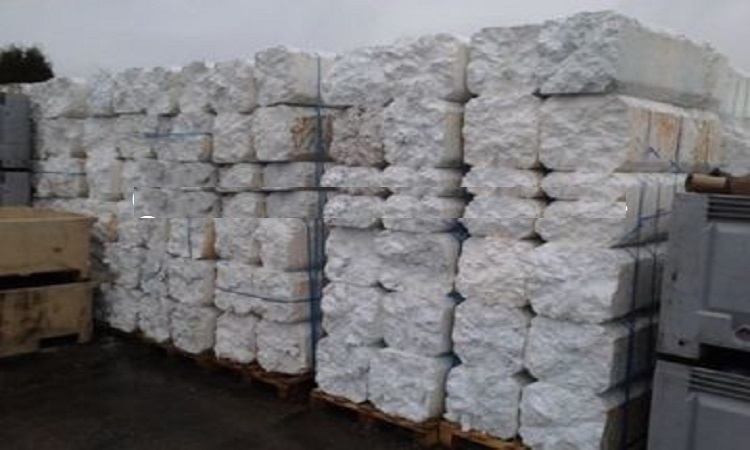
EPS Block Scrap
Expanded polystyrene building products can be made with recycled content. This is achieved by blending post-industrial EPS that has been passed through a grinder, which reduces the material back into individual bead-sized particles that are then reintroduced into the molding process. Technical considerations generally limit the level of recycled content loading from 10 to 20 percent to maintain the minimum performance standards, as specified in ASTM C578, “Standard Specification for Rigid, Cellular Polystyrene Thermal Insulation.” However, specialized processes can incorporate higher recycled content levels.
Other EPS waste can be reground and mixed with concrete to produce new building products such as prefabricated concrete blocks. Adding EPS regrind increases the thermal performance of these applications in addition to providing an alternative to landfill disposal. Another example of recycled content EPS use can be found in co-mingled plastics products such as decking, lumber and interior trim. In 2019, more than 136 million pounds of EPS was recycled, with the majority reprocessed in a closed-loop process. The amount recycled includes 46 million pounds of expanded polystyrene post-consumer packaging and 90 million pounds of post-industrial recovery. Post-consumer recycling is defined as any material that is recycled after its intended end-use as a consumer item – while post-industrial recovery would include EPS facility scrap that is recycled and therefore diverted from the municipal solid waste stream.
At Best Link Scrap We supply the best quality of EPS Block Scrap for first grade reproduction.
Contact Us Now
and place your order and have a customer satisfactory experience